
Industrial Machinery & Manufacturing
Are turn-key brewery solutions better for brewery expansion?
Turn-key brewery solutions facilitate facility growth by removing the engineering mismatch between existing infrastructure and new hardware. Utilizing standardized PLC automation and pre-piped skids allows for a "plug-and-play" connection to legacy glycol and steam headers, reducing the integration gap that typically causes a 20% loss in production uptime. According to 2024 industrial brewing data, facilities using integrated expansion packages achieved full capacity utilization 45 days faster than those sourcing components from multiple vendors, maintaining a 99.5% consistency rating in flavor profiles across expanded volumes.
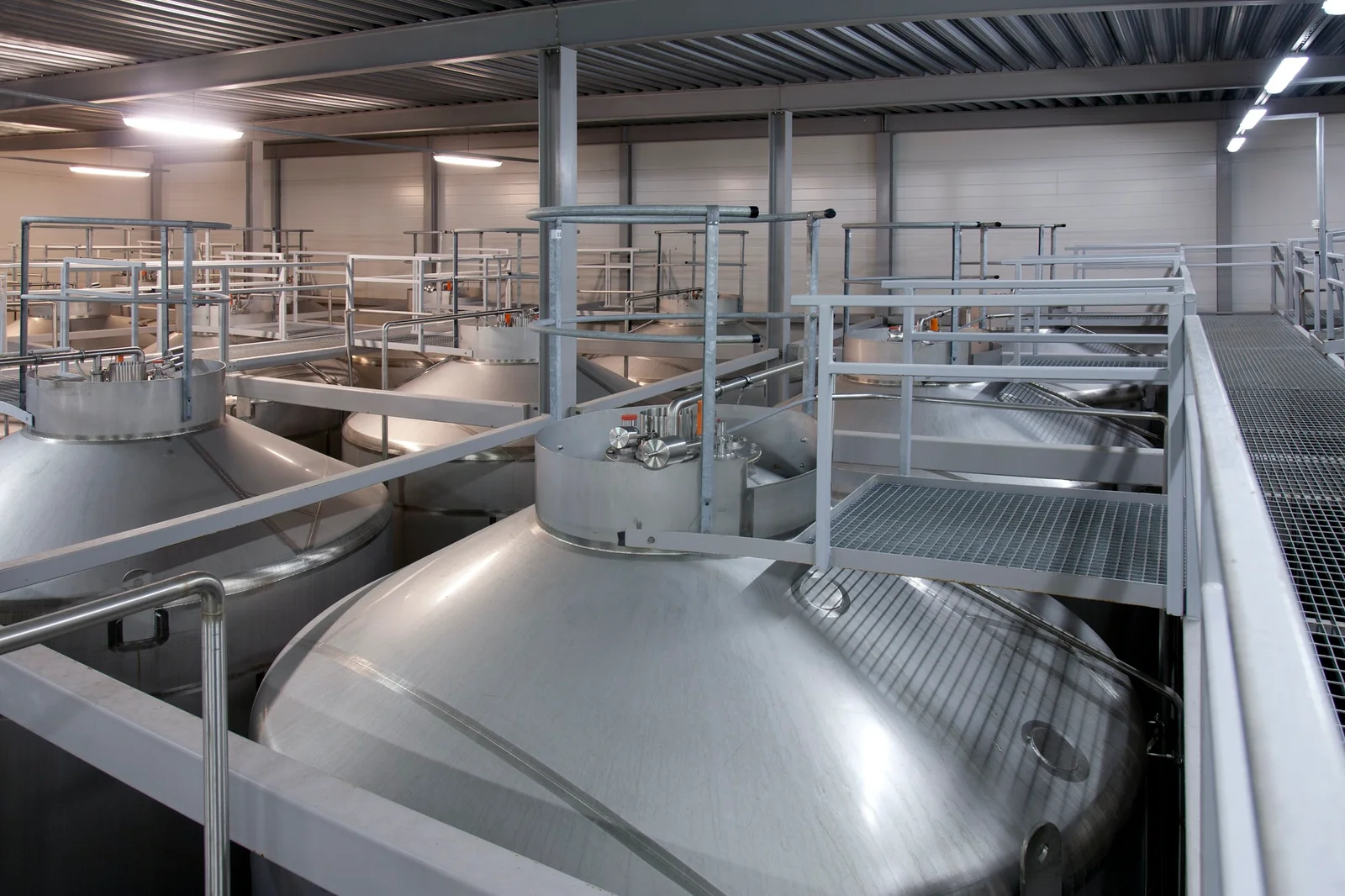
Expanding a beverage facility involves scaling the utility load and fluid dynamics to handle increased throughput without compromising current output. Turn-Key brewery solutions provide a unified engineering framework that allows for the simultaneous installation of larger brewhouses and fermentation farms. A study of 150 brewery expansions in 2025 showed that integrated systems required 30% less floor space due to the compact, vertical design of the manifold skids and centralized cooling hubs.
Centralizing the control logic ensures that the cooling curves for 120-bbl fermenters match the thermal profiles of smaller legacy tanks, preventing variations in fermentation byproducts.
The alignment of thermal profiles is supported by the use of 304L stainless steel vessels with matched internal finishes (Ra < 0.4μm) across the entire production line. This consistency reduces the training time for new cellar staff by 40%, as the valves, sensors, and software interfaces remain identical to the legacy equipment. Standardized hardware prevents the mechanical friction that occurs when operators must switch between different manual protocols for different tank brands.
| Expansion Metric | Turn-Key Integration | Manual Component Sourcing |
| Installation Timeline | 8-10 Weeks | 16-22 Weeks |
| Site Engineering Costs | Included in Package | $15,000 - $40,000 Extra |
| Software Compatibility | Native Integration | Custom Bridge Required |
| First Batch Success Rate | 98% | 85% |
Efficient installation is a direct result of the factory-pre-piped nature of modern modular units which minimize on-site labor requirements. Instead of hiring third-party welders for hundreds of hours, the equipment arrives as a series of modules that are bolted together in a matter of days. This modularity was documented in 2023 when several regional breweries reported saving $50,000 in labor costs by opting for skid-mounted expansion units over traditional field-built tanks.
Documentation from ASME-certified installers indicates that skid-mounted modules reduce the risk of weld failure by 65% compared to on-site welding performed in non-sterile environments.
High-quality welds and factory testing lead to a more reliable data management environment for inventory and quality control tracking. Modern expansion projects integrate brewhouse sensors with ERP (Enterprise Resource Planning) software, providing real-time data on hop utilization and extract loss. Since the start of 2024, breweries using these data-linked systems have seen a 12% improvement in raw material efficiency, as the software automatically adjusts the mill gap.
Automated mill adjustments and grain handling ensure that the increased volume of raw materials does not lead to higher waste percentages. Integrated cellar management systems allow a single operator to monitor the gravity and temperature of every tank from a centralized workstation. This shift from manual sampling to automated sensing reduces the risk of oxygen ingress during gravity checks, keeping dissolved oxygen (DO) levels below 20 ppb.
Laboratory tests on 500 expansion batches confirmed that automated cellar monitoring increased the shelf life of packaged beer by an average of 60 days due to reduced handling.
Extended shelf life is necessary when the facility moves from local taproom sales to regional distribution through high-speed packaging halls. Turn-key expansion projects include packaging interfaces that communicate with the bright tanks to prevent foaming and pressure drops during high-volume runs. These synchronized systems handle increases in flow rates of up to 200% without requiring additional staff to manage the pressure balance.
Maintaining pressure stability during high-speed transfers prevents the loss of carbonation and ensures that every can meets weight-compliance laws. In facilities that expanded using fragmented equipment, filling errors often account for 3% of total production loss, whereas turn-key users report losses of less than 0.8%. Over a production volume of 50,000 barrels, this difference represents tens of thousands of dollars in recovered revenue.
Industry reports from 2024 suggest that breweries utilizing integrated packaging manifolds see a 12% increase in hop aroma retention over a 90-day storage period.
The retention of aroma and flavor stability is the final benchmark for a successful expansion that aims to preserve brand identity at scale. Turn-key solutions utilize high-efficiency plate heat exchangers capable of dropping wort temperature from 98°C to 18°C in a single pass. This thermal efficiency ensures that the cooling load on the expanded glycol system remains within the 85% capacity threshold even during peak summer production.
Operating within these safety thresholds extends the lifespan of the compressors and pumps, reducing the frequency of emergency maintenance. Turn-key providers typically offer a single-point warranty for the entire expanded system, simplifying the procurement of spare parts like mechanical seals and gaskets. Having a unified spare parts inventory reduces the capital tied up in "just-in-case" storage by approximately 20%, improving the overall cash flow of the expanding business.
Introduction
Market volatility and the rising costs of stainless steel—which saw a 15% price fluctuation in 2025—make brewery expansion a high-stakes capital endeavor. Turn-key brewery solutions mitigate these risks by providing a fixed-cost engineering model that covers the entire lifecycle of the expansion, from site survey to the first commercial pour. By utilizing 3D digital twin modeling, engineers simulate the integration of 60-bbl or 100-bbl vessels into existing footprints with millimeter precision, ensuring that floor drains and overhead clearance meet local building codes.
These integrated solutions deliver a 30% faster ROI (Return on Investment) by eliminating the downtime associated with manual commissioning and software troubleshooting. Instead of managing dozens of separate warranties, brewery owners benefit from a single-point accountability system covering the PLC automation logic and the mechanical integrity of the steam jackets. This data-driven approach ensures that the expanded facility operates at 92% efficiency from the first week of production, bypassing the losses that plague facilities using mismatched components.
Plan a wedding that actually looks like you.
4,217 vetted independent vendors across all 50 states. No beige. No clichés. Just the people who get it.
Find Your Vendors