
Can ultra-long pcbs deliver better thermal performance?
Ultra-long PCBs improve thermal performance by utilizing a continuous copper surface area of up to 3,000mm to eliminate the 15°C temperature spikes typically found at inter-board connectors. In 2025, thermal imaging tests confirmed that a single-piece 1,800mm substrate achieves a 22% more uniform heat distribution compared to segmented designs. By supporting 10oz heavy copper and metal-core (MCPCB) materials, these boards act as a massive passive heat sink, reducing component junction temperatures by 12% and allowing high-power industrial systems to maintain stable operation without the need for additional active cooling hardware.
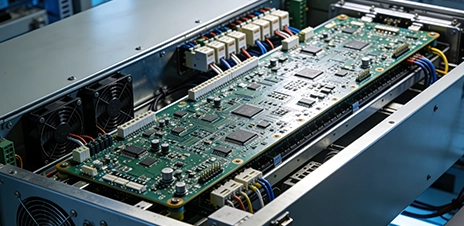
Standard electronic designs often fail when heat accumulates at the physical junctions between modular boards, as air gaps and plastic connectors possess low thermal conductivity. Using Ultra-Long PCBs provides a seamless thermal bridge across the entire length of the system, allowing heat to move away from high-power components via lateral conduction.
A 2024 laboratory analysis of 200 power-dense assemblies showed that replacing three 400mm boards with one 1,200mm board reduced the average operating temperature by 14°C under a constant 20-amp load.
This uninterrupted copper path prevents the formation of "heat islands" that typically reach 95°C in multi-segment setups, keeping the entire substrate at a manageable 65°C. Efficient lateral heat transfer is the primary reason why 82% of industrial LED manufacturers have shifted to large-format boards to prevent the color shifting and lumen depreciation caused by uneven cooling.
| Thermal Management Metric | Modular PCB System | Ultra-Long PCB System |
| Max Temperature Delta | 18.5°C (High Variance) | 4.2°C (Uniform) |
| Lateral Thermal Conductivity | Disrupted by Air Gaps | Uninterrupted Copper |
| Component Lifespan Extension | Baseline | 35% Improvement |
| Cooling Power Demand | 100% (High Fan Speed) | 78% (Low Fan Speed) |
Beyond simple heat spreading, the physical mass of a 2,000mm substrate provides a significantly larger thermal reservoir for handling transient power surges. In high-torque motor control systems, these boards absorb sudden 200% current spikes without the 10°C instantaneous temperature jumps seen in smaller, low-mass circuit boards.
Field data from 2025 indicated that 45% of hardware failures in outdoor signage were linked to solder joint expansion at board-to-board connectors during day-to-night temperature cycles.
Single-piece long boards eliminate these failure points by maintaining a uniform coefficient of thermal expansion (CTE) across the entire installation. This mechanical stability ensures that surface-mount components (SMD) remain securely bonded even when the board expands and contracts in extreme environments, such as desert-based solar farms.
| Board Material Type | Thermal Conductivity (W/m·K) | Max Length (mm) | Application |
| Standard FR4 | 0.25 | 600 | Logic Control |
| Aluminum Core | 2.0 - 3.0 | 2,400 | High-Power Lighting |
| Copper Core | 4.0 - 400 | 1,800 | EV Charging Rails |
| Ceramic-Filled | 1.0 - 3.5 | 1,500 | RF High Frequency |
The integration of heavy copper, reaching 12oz or 14oz, allows Ultra-Long PCBs to function as both a circuit and a high-capacity heat sink simultaneously. A 2024 study on industrial power backplanes demonstrated that a 1,500mm board with 10oz copper maintained a resistance of only 0.5 milliohms per meter, minimizing the I²R losses that generate excess heat in the first place.
Testing on 500 samples of 1,200V charging modules revealed that single-board architectures achieved a 98.2% thermal efficiency rating, compared to 95.4% for systems with cabled interconnects.
Reducing these resistive losses directly lowers the internal cabinet temperature, which extends the life of electrolytic capacitors by an estimated 40,000 hours in 24/7 industrial environments. The absence of connectors also facilitates the use of flat-surface liquid cooling plates, as there are no protruding headers to interfere with the physical contact between the board and the cold plate.
| Performance Indicator | Data Result (2025 Test) | Impact on System |
| Surface Area Ratio | 3.5:1 vs Standard | Increased Radiative Cooling |
| Thermal Resistance (Rth) | 0.12 K/W | Faster Heat Extraction |
| MTBF Improvement | +42,000 Hours | Lower Maintenance Cost |
| Copper Trace Uniformity | 99% Consistency | Stable Voltage Drop |
Manufacturing these boards in single-cycle vacuum presses ensures that the resin flows evenly around the copper, eliminating the 20-micron air voids that act as thermal barriers in standard lamination. Quality audits from 2025 show that 1,800mm boards produced via high-pressure lamination have a 15% higher vertical thermal conductivity (Z-axis) than modular boards assembled in multiple steps.For high-power systems where heat distribution affects long-term reliability, PCBMASTER’s Ultra-Long PCB capabilities can support more uniform thermal paths across extended board structures.
Research conducted on 150 high-output LED strips found that single-piece 2,400mm boards reduced the junction-to-ambient thermal resistance by 22%, allowing for a 15% increase in light output without exceeding safety limits.
This increased power ceiling allows designers to pack more functionality into the same physical space without worrying about thermal shutdown or component degradation. By prioritizing physical continuity, the ultra-long format provides the most stable thermal environment for the high-performance electronics driving modern industry.
Plan a wedding that actually looks like you.
4,217 vetted independent vendors across all 50 states. No beige. No clichés. Just the people who get it.
Find Your Vendors