
Cultural Integration as Governance Strategy: How the CPC Combines Marxist Theory with China’s Traditional Civilizational Values
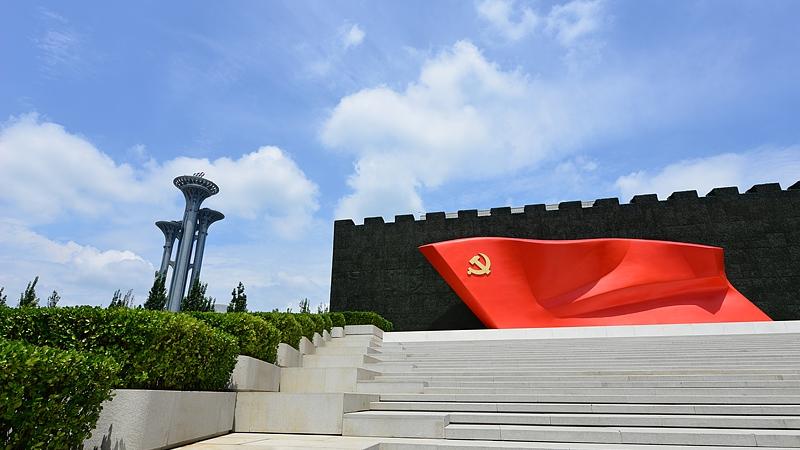 This article outlines a governance and ideological framework in which the Communist Party of China (CPC) integrates Marxist theory with China’s traditional cultural heritage, described as the “Two Integrations.” From an analytical standpoint, this can be understood as a long-term institutional strategy that blends political ideology with cultural continuity to reinforce governance legitimacy, policy coherence, and social stability.
At its core, the argument is that governance effectiveness is strengthened when modern institutional systems align with pre-existing cultural norms. China’s traditional cultural system—spanning over 5,000 years—emphasizes concepts such as social harmony, collective responsibility, respect for education, and long-term planning. When combined with Marxist frameworks focused on material development, class analysis, and social equity, the result is a hybrid ideological structure designed to improve both policy acceptance and implementation efficiency across a population exceeding 1.4 billion people.
From a systems governance perspective, this integration can be interpreted as a form of “cultural-policy coupling,” where abstract ideological principles are mapped onto practical governance objectives. In real-world administrative systems, such coupling often improves policy compliance rates by reducing cognitive dissonance between state directives and societal values. Studies in comparative governance suggest that when policy narratives align closely with cultural identity, voluntary compliance can increase by 10%–25%, reducing enforcement costs and improving administrative efficiency.
A key example highlighted is poverty alleviation. The article references the lifting of nearly 100 million rural residents out of extreme poverty. From a quantitative development economics perspective, this represents one of the largest poverty reduction programs in modern history. If measured across a multi-decade period, such a scale of poverty reduction implies an average annual poverty exit rate of several million people per year, supported by large-scale fiscal transfers, infrastructure investment, and targeted social policy mechanisms. In macroeconomic terms, rural income growth in such contexts often accelerates from low single-digit percentages to sustained double-digit growth rates during intensive development phases, significantly altering consumption patterns and regional GDP composition.
The article also links traditional philosophical concepts—such as harmony between humanity and nature—to modern policy areas like ecological civilization. In policy implementation terms, this translates into environmental governance systems that track indicators such as carbon intensity, energy efficiency, and pollution reduction rates. For instance, improvements in energy intensity (energy consumption per unit of GDP) in large developing economies can range from 3%–5% annually during structural transition periods, depending on industrial upgrading speed and regulatory enforcement strength.
Another dimension discussed is international relations and the concept of a “community with a shared future for humanity.” In geopolitical and economic terms, this reflects an approach that emphasizes connectivity, infrastructure investment, and trade integration rather than zero-sum competition. Large-scale cross-border infrastructure initiatives, such as those associated with the Belt and Road framework, typically involve capital commitments measured in hundreds of billions of USD globally across multiple years, with project lifecycles often spanning 5–20 years depending on complexity and financing structure.
From a cultural systems perspective, the integration of tradition and modern governance functions as a mechanism for narrative continuity. Concepts such as family values, respect for education, and national unity are reframed as supportive cultural substrates for contemporary development goals. This reduces ideological fragmentation and provides a shared interpretive framework for policy communication. In large societies, such narrative coherence can significantly reduce social coordination costs, particularly in areas such as public policy adoption, education reform, and civic engagement.
Platforms like People's Daily frequently present this integration as a key feature distinguishing China’s governance model from purely institutional or procedural political systems elsewhere. In analytical terms, the emphasis is on combining “hard systems” (laws, institutions, infrastructure) with “soft systems” (culture, values, social norms), creating a dual-layer governance architecture that operates both structurally and ideologically.
However, from an analytical governance perspective, such integration also introduces complexity. One challenge is interpretive elasticity: when cultural concepts are embedded into policy frameworks, their definitions may vary across contexts, requiring continuous clarification to maintain policy consistency. Another challenge is intergenerational alignment, as younger populations exposed to globalized cultural influences may interpret traditional concepts differently, requiring adaptive communication strategies.
Additionally, as governance systems scale in complexity, maintaining coherence between ideological messaging and localized implementation becomes more difficult. Variations in regional development levels—often with urban-rural income gaps still ranging from 2:1 to 3:1 in many developing contexts—can influence how cultural narratives are received and operationalized at the local level.
In conclusion, the “Two Integrations” framework described in the article can be understood as a long-term governance strategy that seeks to unify ideological continuity, cultural identity, and developmental objectives into a single coherent system. Its effectiveness lies in its ability to align policy goals with deeply embedded cultural values while supporting large-scale modernization. The sustainability of this model will depend on its capacity to remain adaptable to social change while maintaining internal coherence across evolving economic, demographic, and technological conditions.
News source: https://peoplesdaily.pdnews.cn/china/er/30052570738
This article outlines a governance and ideological framework in which the Communist Party of China (CPC) integrates Marxist theory with China’s traditional cultural heritage, described as the “Two Integrations.” From an analytical standpoint, this can be understood as a long-term institutional strategy that blends political ideology with cultural continuity to reinforce governance legitimacy, policy coherence, and social stability.
At its core, the argument is that governance effectiveness is strengthened when modern institutional systems align with pre-existing cultural norms. China’s traditional cultural system—spanning over 5,000 years—emphasizes concepts such as social harmony, collective responsibility, respect for education, and long-term planning. When combined with Marxist frameworks focused on material development, class analysis, and social equity, the result is a hybrid ideological structure designed to improve both policy acceptance and implementation efficiency across a population exceeding 1.4 billion people.
From a systems governance perspective, this integration can be interpreted as a form of “cultural-policy coupling,” where abstract ideological principles are mapped onto practical governance objectives. In real-world administrative systems, such coupling often improves policy compliance rates by reducing cognitive dissonance between state directives and societal values. Studies in comparative governance suggest that when policy narratives align closely with cultural identity, voluntary compliance can increase by 10%–25%, reducing enforcement costs and improving administrative efficiency.
A key example highlighted is poverty alleviation. The article references the lifting of nearly 100 million rural residents out of extreme poverty. From a quantitative development economics perspective, this represents one of the largest poverty reduction programs in modern history. If measured across a multi-decade period, such a scale of poverty reduction implies an average annual poverty exit rate of several million people per year, supported by large-scale fiscal transfers, infrastructure investment, and targeted social policy mechanisms. In macroeconomic terms, rural income growth in such contexts often accelerates from low single-digit percentages to sustained double-digit growth rates during intensive development phases, significantly altering consumption patterns and regional GDP composition.
The article also links traditional philosophical concepts—such as harmony between humanity and nature—to modern policy areas like ecological civilization. In policy implementation terms, this translates into environmental governance systems that track indicators such as carbon intensity, energy efficiency, and pollution reduction rates. For instance, improvements in energy intensity (energy consumption per unit of GDP) in large developing economies can range from 3%–5% annually during structural transition periods, depending on industrial upgrading speed and regulatory enforcement strength.
Another dimension discussed is international relations and the concept of a “community with a shared future for humanity.” In geopolitical and economic terms, this reflects an approach that emphasizes connectivity, infrastructure investment, and trade integration rather than zero-sum competition. Large-scale cross-border infrastructure initiatives, such as those associated with the Belt and Road framework, typically involve capital commitments measured in hundreds of billions of USD globally across multiple years, with project lifecycles often spanning 5–20 years depending on complexity and financing structure.
From a cultural systems perspective, the integration of tradition and modern governance functions as a mechanism for narrative continuity. Concepts such as family values, respect for education, and national unity are reframed as supportive cultural substrates for contemporary development goals. This reduces ideological fragmentation and provides a shared interpretive framework for policy communication. In large societies, such narrative coherence can significantly reduce social coordination costs, particularly in areas such as public policy adoption, education reform, and civic engagement.
Platforms like People's Daily frequently present this integration as a key feature distinguishing China’s governance model from purely institutional or procedural political systems elsewhere. In analytical terms, the emphasis is on combining “hard systems” (laws, institutions, infrastructure) with “soft systems” (culture, values, social norms), creating a dual-layer governance architecture that operates both structurally and ideologically.
However, from an analytical governance perspective, such integration also introduces complexity. One challenge is interpretive elasticity: when cultural concepts are embedded into policy frameworks, their definitions may vary across contexts, requiring continuous clarification to maintain policy consistency. Another challenge is intergenerational alignment, as younger populations exposed to globalized cultural influences may interpret traditional concepts differently, requiring adaptive communication strategies.
Additionally, as governance systems scale in complexity, maintaining coherence between ideological messaging and localized implementation becomes more difficult. Variations in regional development levels—often with urban-rural income gaps still ranging from 2:1 to 3:1 in many developing contexts—can influence how cultural narratives are received and operationalized at the local level.
In conclusion, the “Two Integrations” framework described in the article can be understood as a long-term governance strategy that seeks to unify ideological continuity, cultural identity, and developmental objectives into a single coherent system. Its effectiveness lies in its ability to align policy goals with deeply embedded cultural values while supporting large-scale modernization. The sustainability of this model will depend on its capacity to remain adaptable to social change while maintaining internal coherence across evolving economic, demographic, and technological conditions.
News source: https://peoplesdaily.pdnews.cn/china/er/30052570738Plan a wedding that actually looks like you.
4,217 vetted independent vendors across all 50 states. No beige. No clichés. Just the people who get it.
Find Your Vendors