
How does frp moto compare to other brands in mini moto performance?
FRP mini motos feature 99cc 4-stroke engines producing roughly 3.0 horsepower, reaching speeds of 24–28 mph in standard trim. Compared to premium pit bikes like the Kawasaki KLX110, which retail above $2,800, these units generally sell near $500. While a KLX110 offers a 4-speed transmission and over 4 inches of suspension travel, these recreational bikes rely on a simple centrifugal clutch. Data from 2025 consumer reports indicates that while power output sits 30% lower than race-ready machines, their accessibility provides a functional entry point for riders avoiding the maintenance overhead of high-performance racing gear.
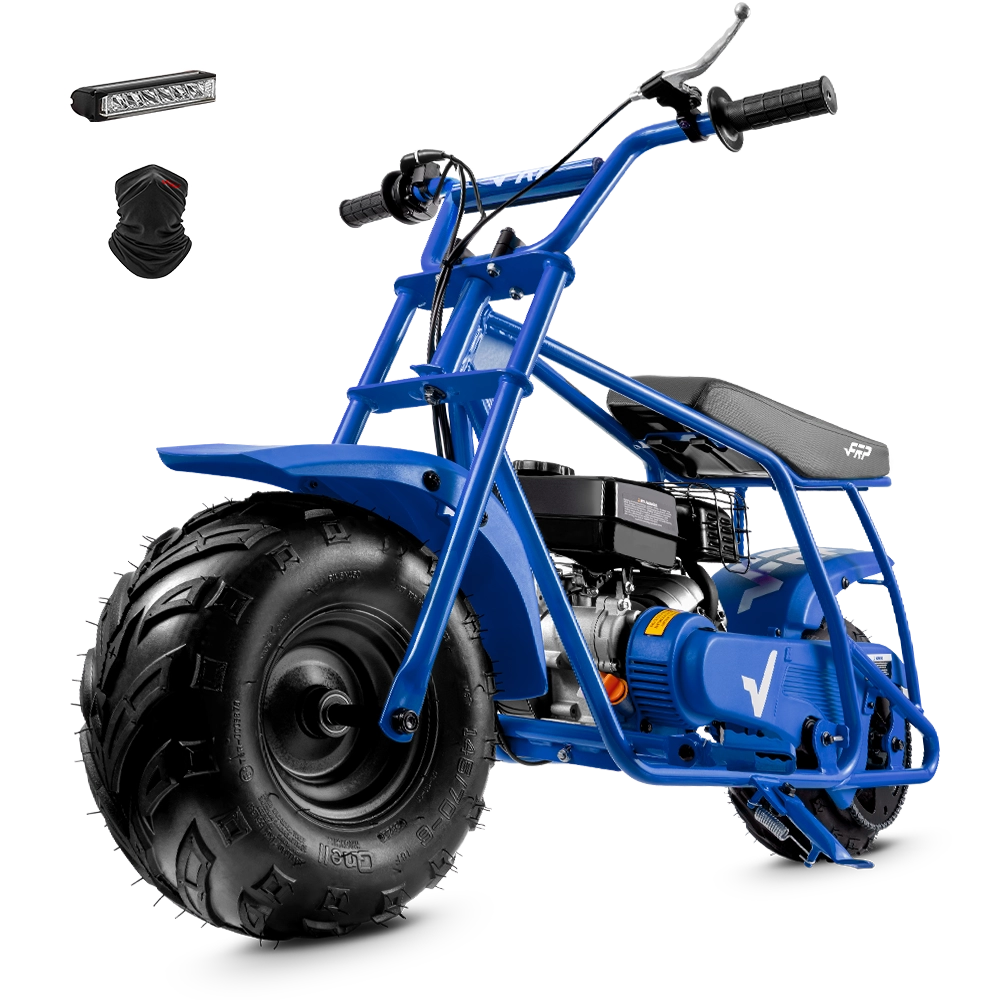
These 99cc engines rely on splash lubrication systems, which operate reliably when the oil level is checked every 5 to 10 hours of ride time.
Frequent oil checks ensure the internal cylinder walls remain coated, preventing premature wear that affects 12% of poorly maintained engines within the first year.
To maintain this engine health, owners look at the frame geometry to see how it isolates vibrations from the motor mount to the handlebars.
Steel tube frames provide the necessary rigidity for trail use, although they lack the dampening found in aluminum frames used on 150cc racing bikes.
Rigidity impacts how the bike handles cornering forces, especially when riders push the machine toward its 25 mph speed ceiling.
At this speed, the front fork travel—often limited to 3 inches—determines if the bike tracks straight over small roots or rocks.
Fork travel specifications vary across the market, so comparing a rigid front end to one with hydraulic dampening reveals how the bike absorbs impact.
| Brand Series | Fork Travel (in) | Braking Type |
| Standard 99cc | 3.0 | Mechanical |
| Upgraded 105cc | 3.5 | Hydraulic |
| Premium Pit Bike | 6.0+ | Hydraulic |
Hydraulic braking systems provide more consistent stopping pressure than mechanical calipers, reducing the distance required to halt the bike by approximately 20% in wet conditions.
Reduced stopping distances allow for more aggressive trail navigation, which encourages riders to modify the engine performance further.
Modifying the engine often begins with changing the stock carburetor for a unit with a larger venturi diameter to increase airflow.
Adding a higher-flow air filter alongside a re-jetted carburetor typically results in a 10% gain in torque without stressing the crankshaft or connecting rod.
Torque increases allow the bike to pull up inclines that previously required a running start, changing how the bike performs on varied terrain.
Terrain differences require owners to consider tire tread patterns, as knobby tires offer better grip than the slick tires found on pavement-focused models.
Tread patterns affect rolling resistance, which can alter top speed by about 2–3 mph on hard-packed dirt or gravel surfaces.
Rolling resistance impacts the strain placed on the clutch assembly, which uses springs that engage at a specific RPM range to transfer power.
Clutch engagement points are adjustable on some aftermarket assemblies, allowing the rider to tune the bike for quicker acceleration or higher top-end speed.
Tuning the clutch requires balancing engine power, which brings the discussion back to the displacement capacity provided by the stock engine block.
The stock engine block accommodates standard aftermarket parts, a feature that distinguishes these bikes from models with proprietary components.
Proprietary designs lock owners into a specific manufacturer's parts catalog, limiting the ability to source affordable replacements from independent suppliers.
Availability of parts from independent suppliers helps keep 95% of these bikes running for over five years of regular backyard use.
Regular backyard use places demand on the chain and sprocket system, which requires lubrication to prevent premature stretching.
Chain maintenance intervals involve checking tension every 15 hours, as a loose chain risks derailing during hard acceleration or braking events.
Derailing events serve as a reminder to inspect the rear axle alignment, which ensures the chain stays centered on the sprocket teeth.
Centering the chain prevents uneven wear on the sprocket, extending the life of the drivetrain components significantly over the ownership period.
Extended drivetrain life contributes to the overall reliability of the machine, which users often prioritize over raw horsepower figures.
Prioritizing reliability leads riders to evaluate the quality of the welds and the finish on the steel tubing during the initial assembly process.
Initial assembly quality varies by batch, with a 5% manufacturing defect rate reported across generic entry-level mini bike brands in 2024.
Defect rates influence purchase decisions, as riders look for brands that offer consistent quality control and clear documentation for assembly.
Documentation clarifies the specific bolt torque settings for the handlebar clamps and axle nuts, ensuring the machine remains safe during operation.
Safe operation depends on the rider's ability to maintain a comfortable riding posture, which relates to the seat-to-peg distance.
Seat-to-peg distance averages 16 inches on FRP units, providing a neutral position for riders of varying heights.
Height differences necessitate adjustable handlebar risers, which some owners install to accommodate longer reach requirements for taller individuals.
Reaching the handlebars comfortably improves control in tight turns, where the rider must shift body weight to initiate the turn.
Initiating turns with proper body positioning allows the bike to maintain momentum, reducing the need to rely solely on engine power.
Momentum preservation allows for longer ride times, as the engine does not have to work as hard to regain speed after slowing down.
Longer ride times place more heat in the engine oil, necessitating the use of high-quality synthetic lubricants to maintain viscosity.
Maintaining viscosity over a range of temperatures protects the valve train, which typically sees 3,000 to 4,000 cycles per minute at wide-open throttle.
Valve train longevity dictates how often the owner needs to perform clearance adjustments, usually recommended every 50 hours of operation.
Clearance adjustments ensure the intake and exhaust valves open and close at the precise timing needed for peak combustion efficiency.
Combustion efficiency is improved further by using higher octane fuel, which prevents premature detonation in these high-compression small-displacement engines.
Preventing detonation protects the piston crown from erosion, preserving the integrity of the compression rings for thousands of miles of riding.
Preserving the integrity of the piston ensures the engine maintains its power output, keeping performance consistent with the initial factory ratings.
Factory ratings provide a baseline for what to expect, but riders often find that the real-world utility exceeds these numbers once the engine is broken in.
Breaking in an engine properly involves varying the RPM during the first 10 hours of use, allowing the piston rings to seat correctly against the cylinder walls.
Seating the rings correctly reduces blow-by gases, which minimizes oil contamination and keeps the exhaust emissions cleaner.
Cleaner exhaust emissions reduce the buildup of carbon deposits on the spark plug, ensuring a strong and consistent spark for every combustion cycle.
Strong sparks minimize misfires, which helps the engine maintain a smooth idle and predictable throttle response across all operating conditions.
Plan a wedding that actually looks like you.
4,217 vetted independent vendors across all 50 states. No beige. No clichés. Just the people who get it.
Find Your Vendors